Starzip, 2026 · Product definition and screen design · Product Design
The problem
The product sold an on-chain asset, and most of the people who might buy it had no wallet. Demand a wallet first and people are filtered out before they have seen what the product is. Those people did not leave because they were uninterested, they left because they lacked a prerequisite, and on screen the two look identical.
I did not build these screens. I owned the product definition and the design, and the engineering team built it. So what I produced was not working screens but a judgment about where to ask for what, and where not to ask at all.
The decision: split browsing from buying
Login and wallet were not bound into one door. An account gets you all the way through what the product is and what it gives you, and the wallet is asked for only at the point of actually buying.
- An account names a person and a wallet names an asset. They point at different things to begin with, so binding them means changing one drags the other
- Lead with the wallet and the drop-off happens before the judgment. People leaving after seeing what is for sale is information; people leaving before that tells you nothing
- Someone who wants to buy will go get the prerequisite. Demanding the prerequisite before the wanting is what puts the order wrong
What I decided not to do
The easiest fix was to issue the wallet for them, and I did not do it.
Issuing it does make entry demonstrably smoother. But at that moment the key passes through us, and any place a key passes through is a place it can leak from. Such a place is not something to guard carefully, it is something not to create. A rule you promise to keep is a rule you eventually fail to keep; a place that does not exist needs no keeping.
Instead there are several ways to pick a wallet, and the path back from picking one is kept unbroken. In any design that sends people out, the place you actually lose them is not the door out but the door back.
The result
Someone without a wallet can see the whole product first and then decide whether to get one. And because there was never a place where we hold the key, there is no later work of protecting it.
The cost is written down honestly. Empty the front and the back gets heavier. The hardest step now sits immediately before payment, and how to lighten that step is not something these screens finished.
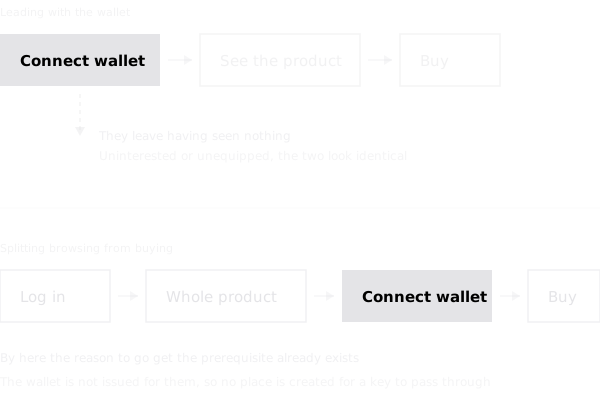
Put the wallet up front and people are filtered out before they have seen what is for sale. Split browsing from buying and the wallet is only needed just before payment.