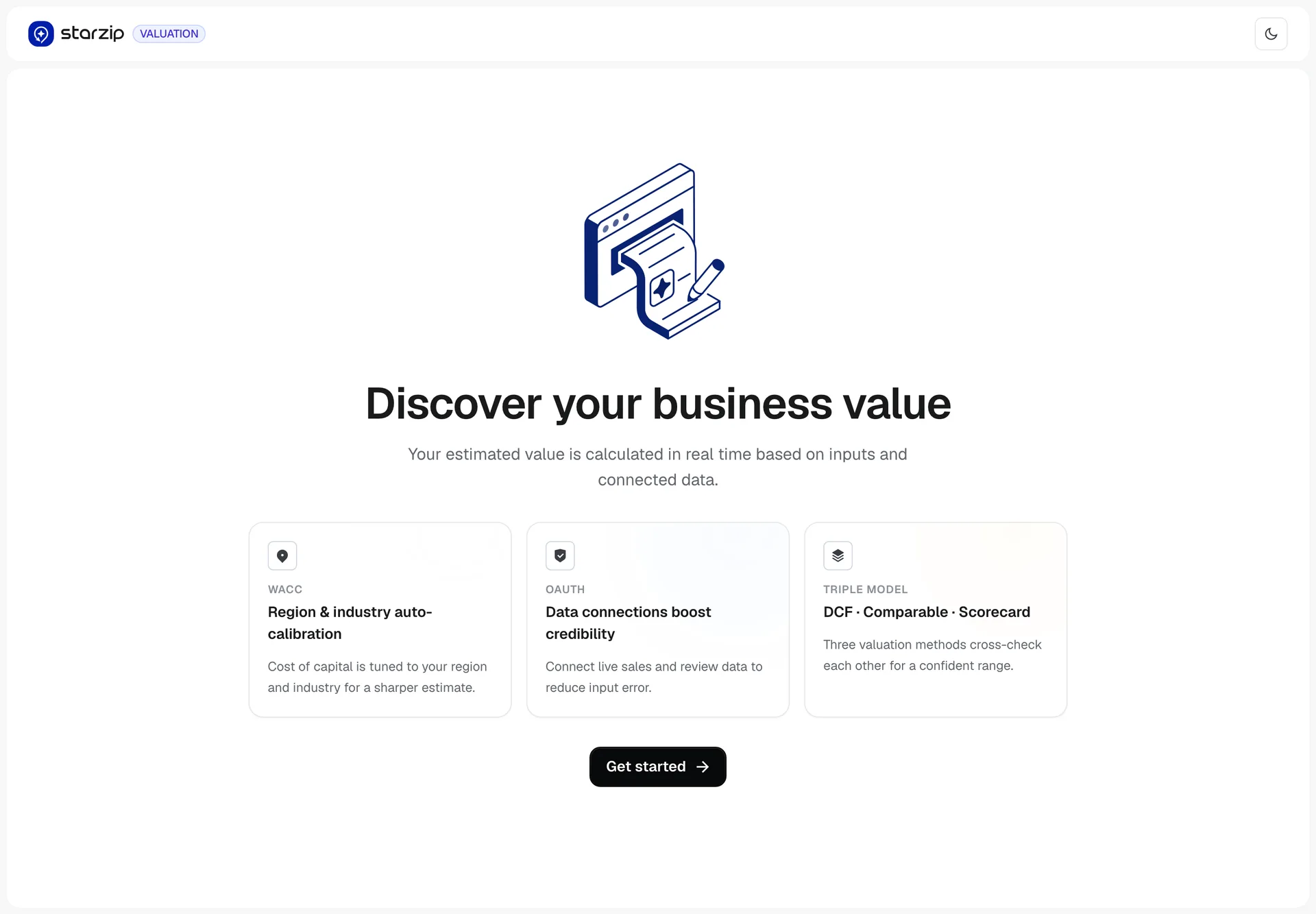
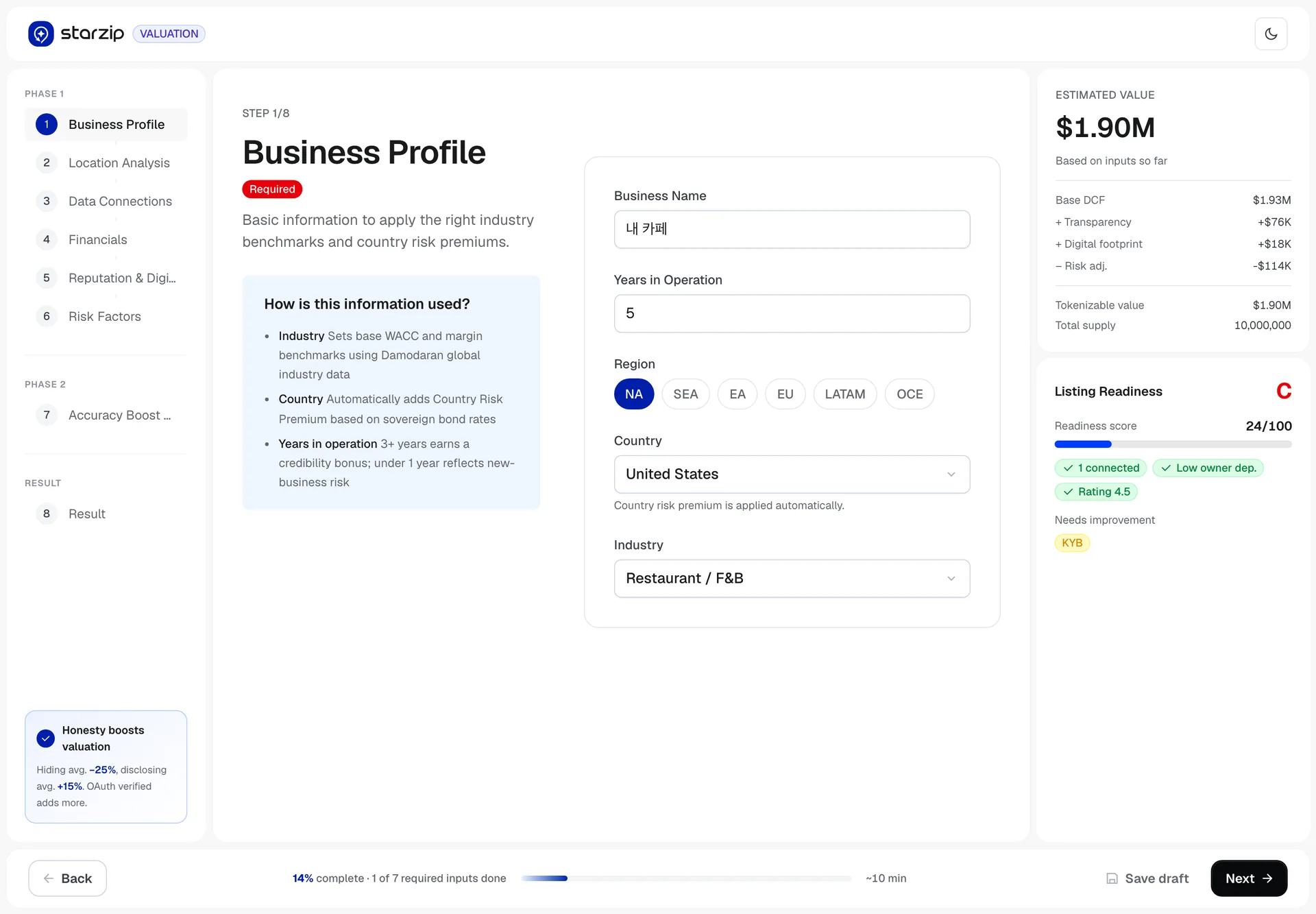
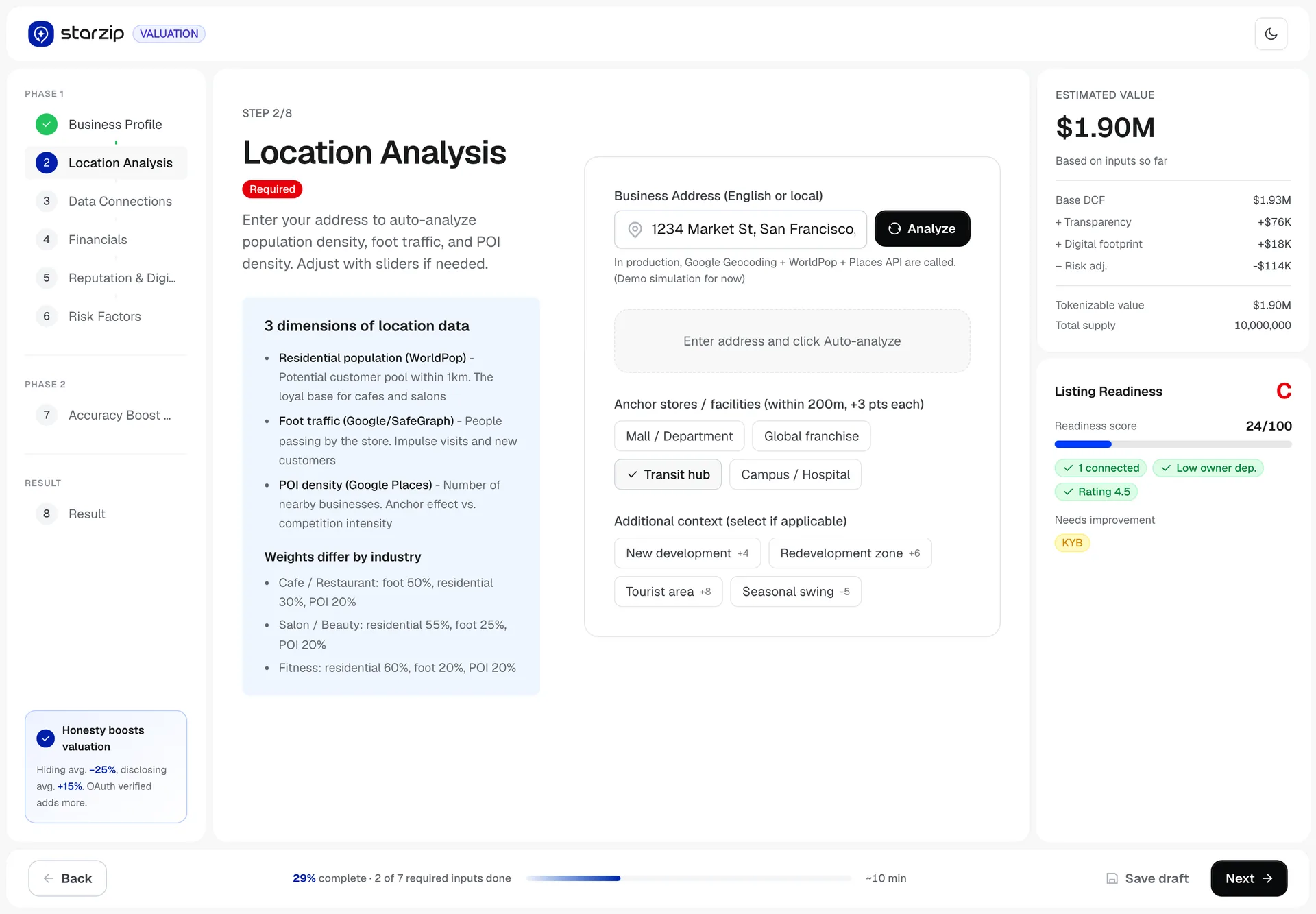
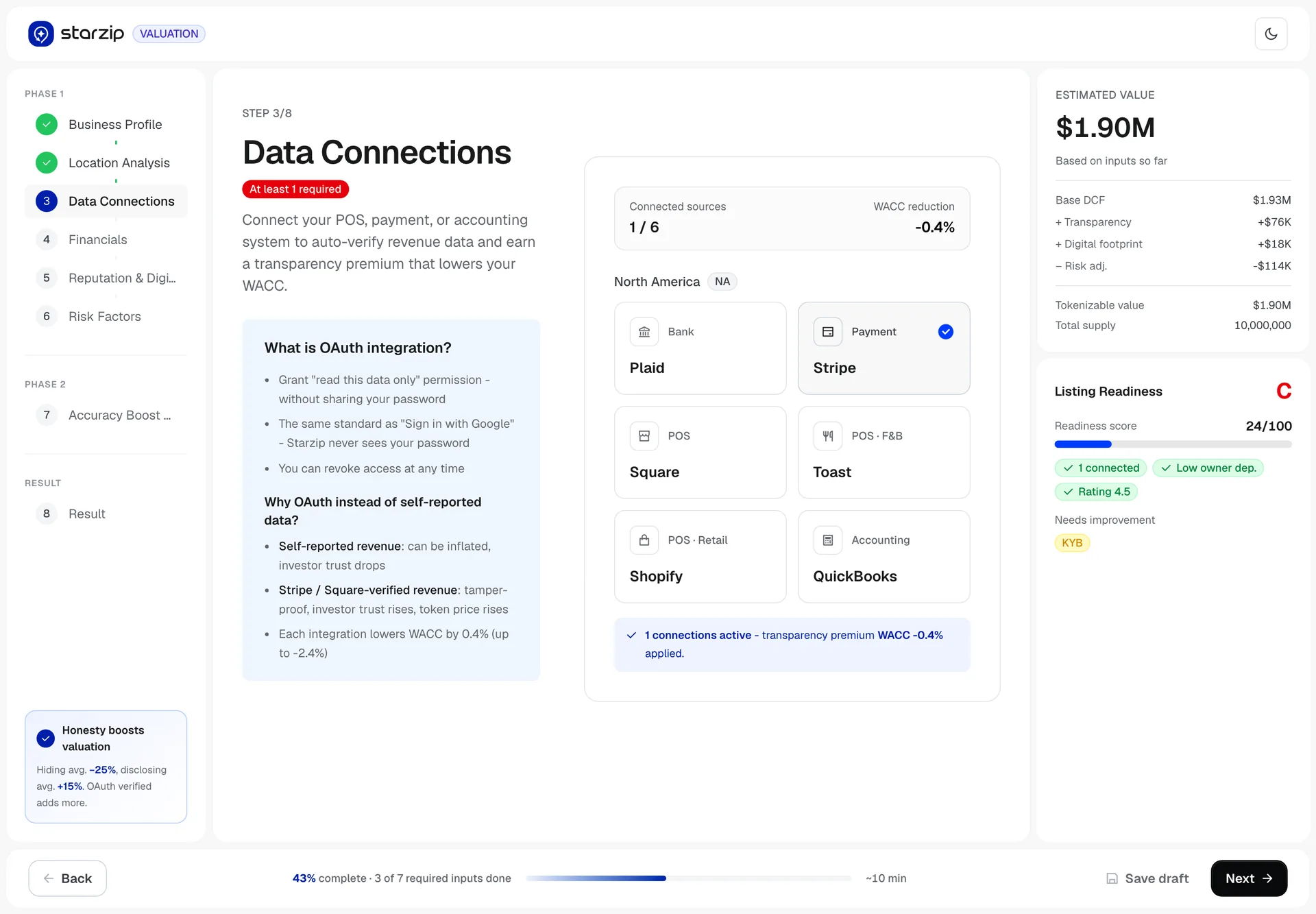
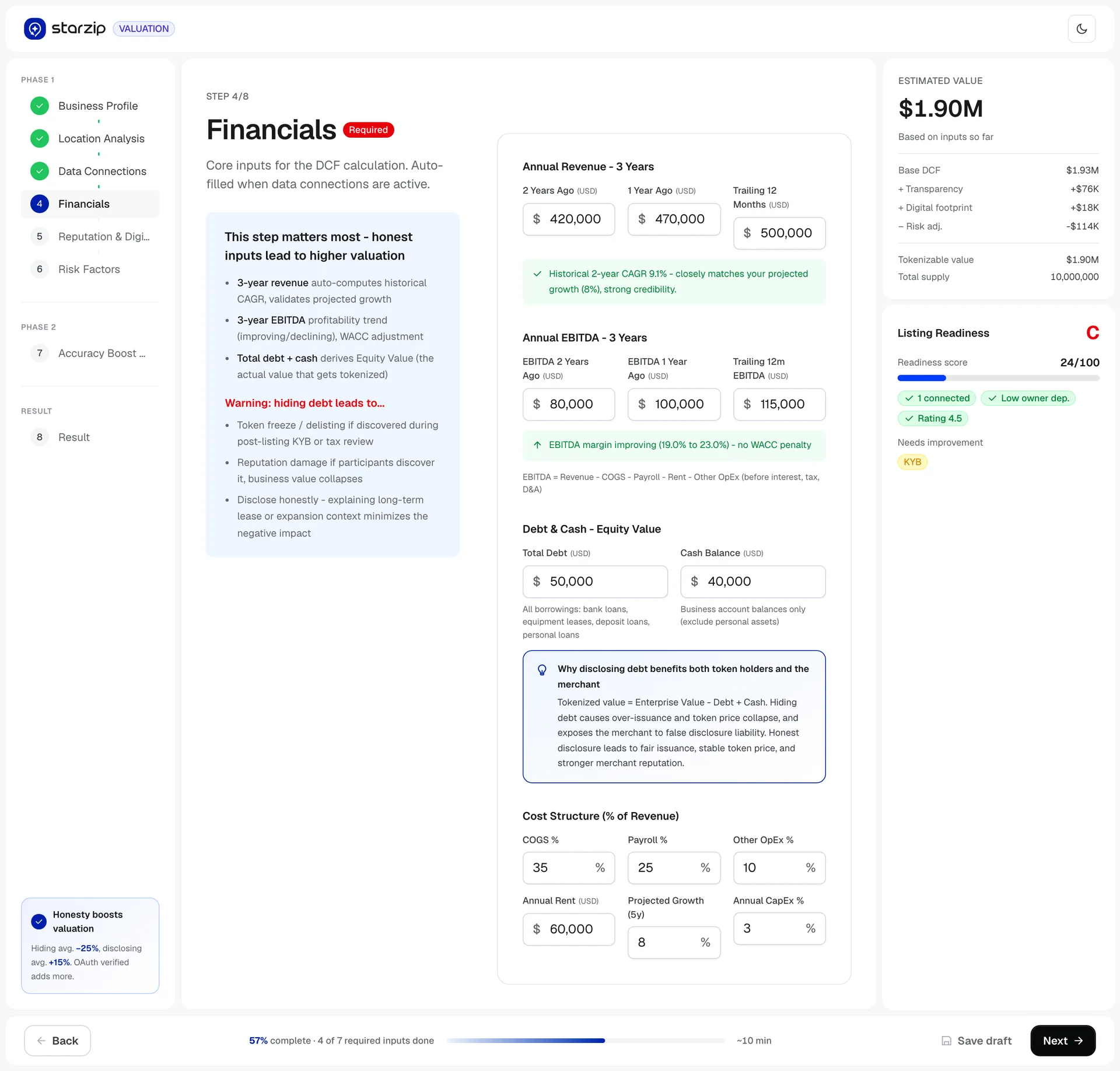
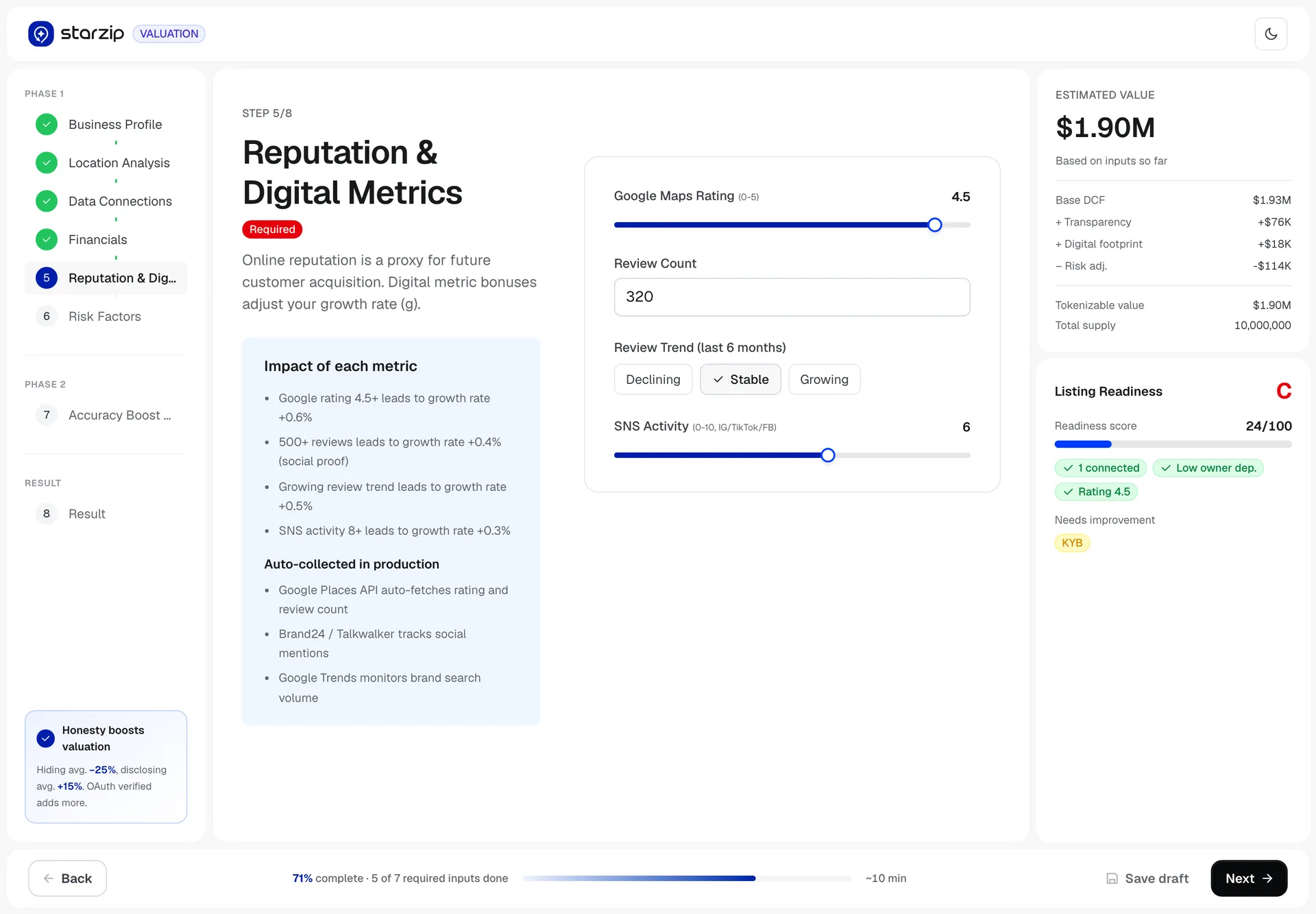
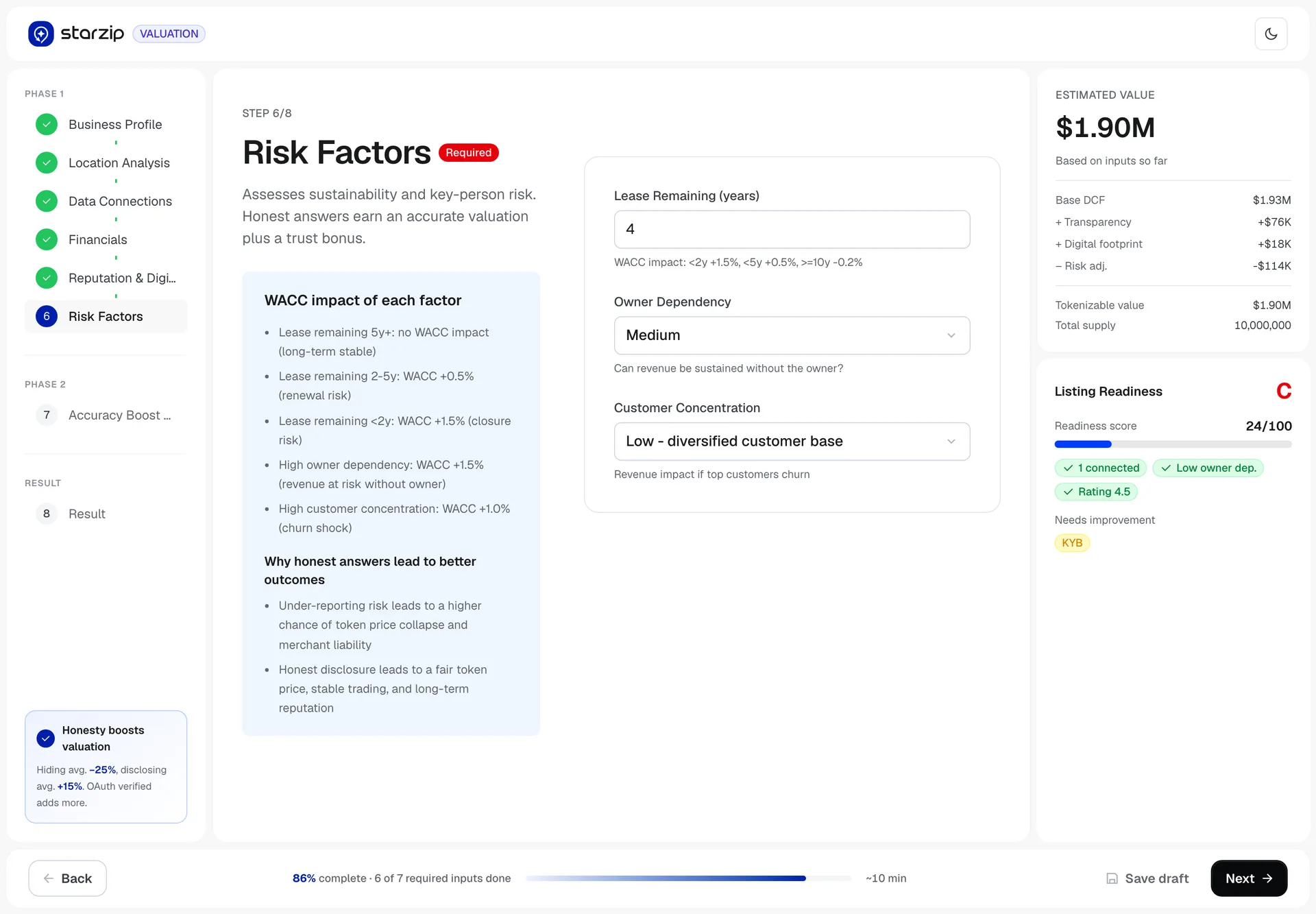
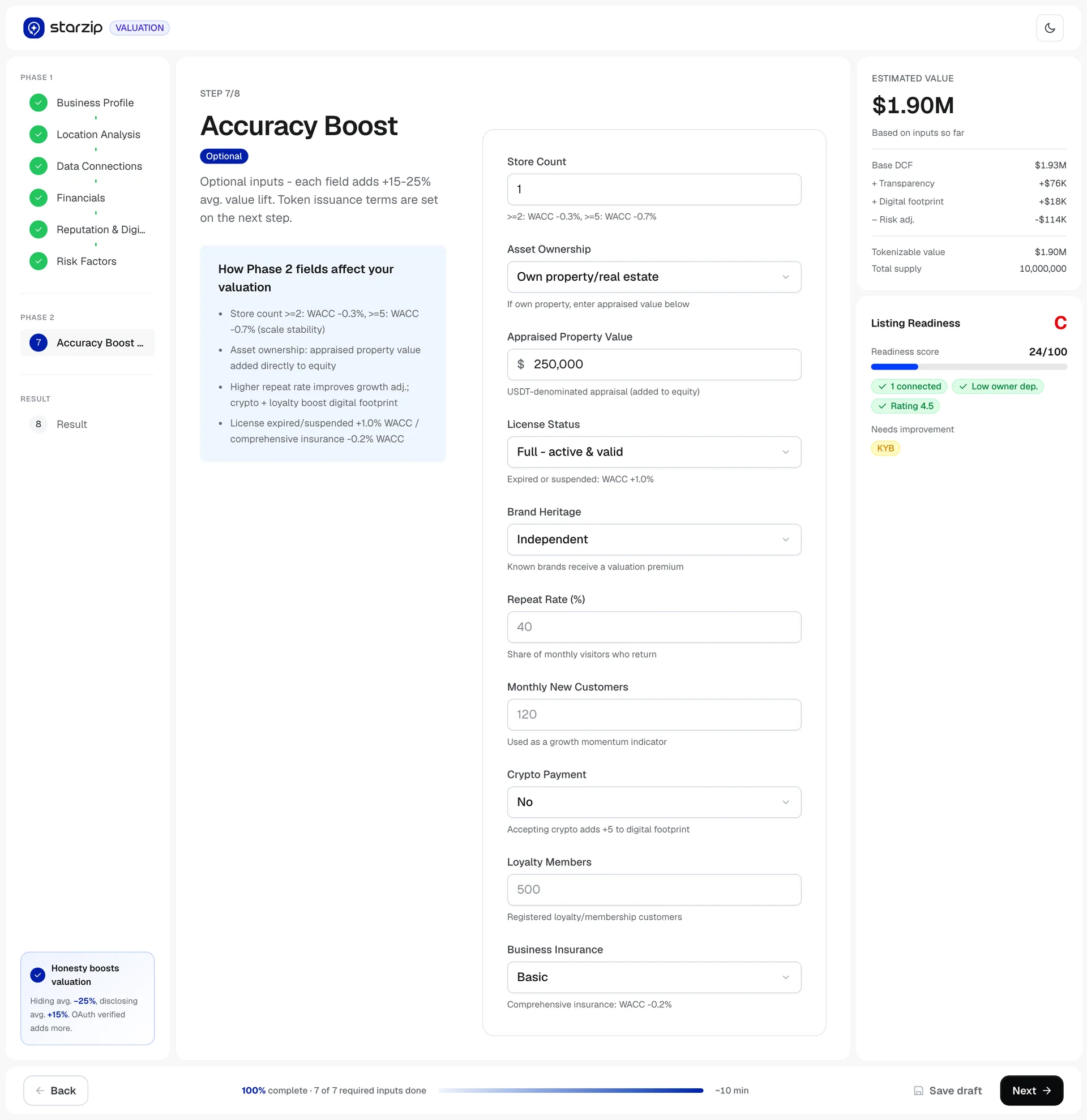
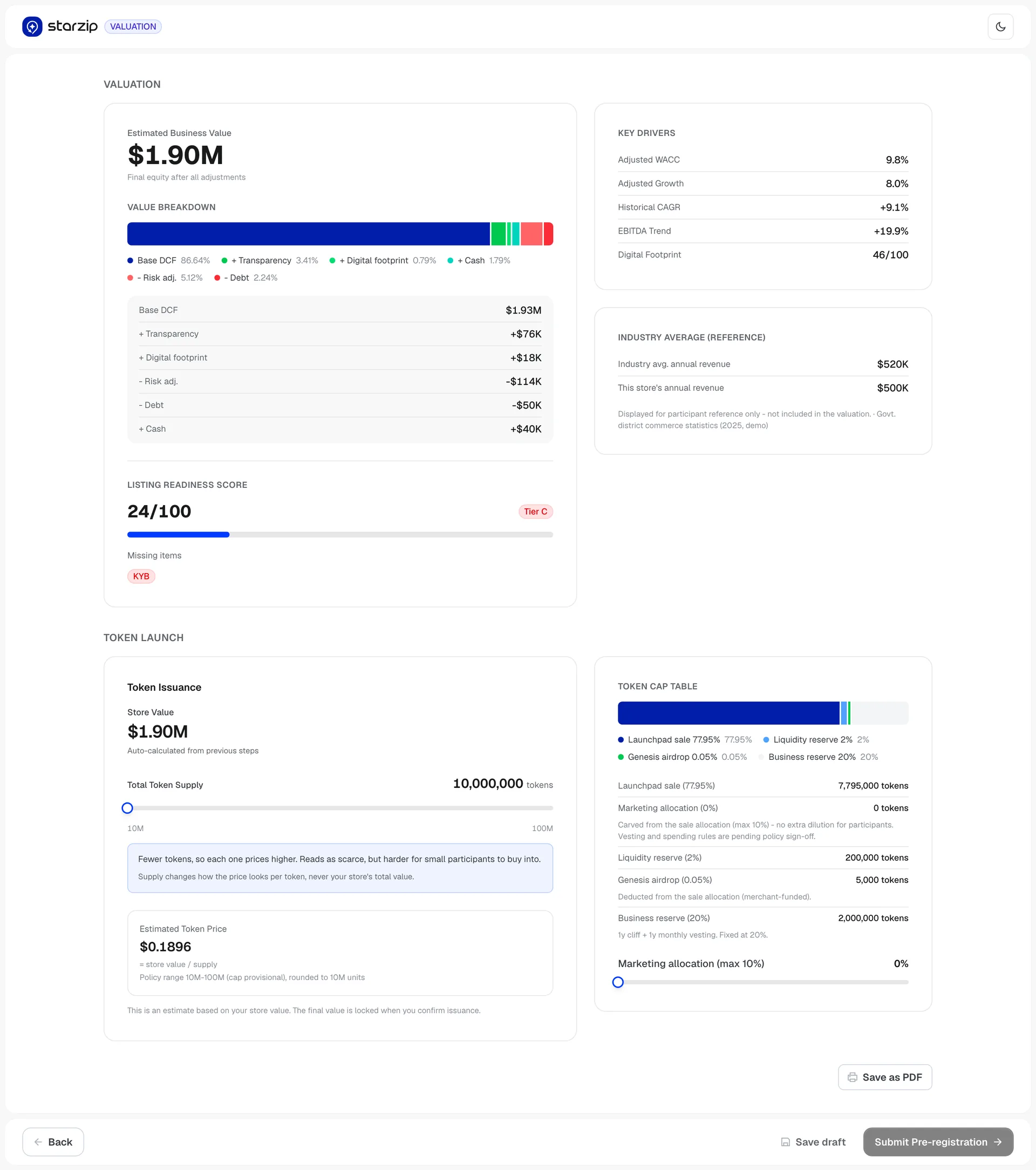
Entry - three methods cross-checkedThree cards under "Discover your business value" say what the tool does before asking anything. This version states that DCF, comparable and scorecard cross-check one another into a range - what it looked like before the launch version narrowed to DCF alone.Step 1 - business profileIt asks only industry, country and years in operation, with a card beside it saying what each one sets - the WACC baseline, the country risk premium, the new-business penalty. The rail on the right already shows an estimate of $1.90M, and it moves as each input lands.Step 2 - locationOne address auto-analyses population, foot traffic and POI density, and the panel states outright that the three carry different weights per industry - 50 per cent foot traffic for a cafe, 55 per cent residential for a salon. It chooses not to hide where the number comes from.Step 3 - connections and the transparency discountConnecting POS, payment or accounting over OAuth drops WACC by 0.4 per cent per source, up to 2.4. The reason comes before the discount: self-reported revenue can be inflated, Stripe- or Square-verified revenue is hard to tamper with.Step 4 - financials, where hiding costs youThree years of revenue, EBITDA, debt and cash - the step that moves the number most. The card beside it opens with what happens if debt is hidden, freeze and delisting once KYB finds it after listing, then a blue box states why honest disclosure serves both the holder and the merchant.Step 5 - reputation and digital metricsGoogle rating, review count, review trend and social activity feed the growth rate, with the exact percentage each one moves listed beside them. It also says these four are auto-collected in production, which marks the manual entry here as temporary.Step 6 - risk, with a bonus for honestyA short step - lease remaining, owner dependency, customer concentration. A table spells out how much each answer moves WACC either way, turning "answer badly and lose value" into "answer honestly and earn a trust bonus".Step 7 - optional accuracy boostOptional fields - store count, asset ownership, appraised value, licence status - each stated up front as worth 15 to 25 per cent on average. The sidebar splits phase 1 from phase 2 so required and optional never blur.Result - the number and where it came fromIt gives $1.90M, then breaks it into six parts right underneath - base DCF, transparency, digital, risk, debt, cash. The industry average is set apart and labelled participant reference, not included in the valuation. Below sits token launch: moving the supply slider moves the price per token, under a line saying supply changes the price per token, never the store's total value.